
The Creatine Journal

Menopause · 4 min read

Creatine and menopause: what it can and can't do

By the editorial team Updated 17 sources
A woman with long gray hair and sunglasses outdoors in an autumn forest.
Photo: Peyman Shojaei / Unsplash, edited

Short answer

After menopause, creatine plus strength training gives you a little more muscle and strength than training alone. That's the one result that keeps showing up. It hasn't been shown to make bones stronger, and nobody has properly tested it on hot flashes. Think of it as a small add-on to lifting, not a replacement for hormone therapy, calcium, vitamin D or the weights.

Key takeaways

  • Muscle and strength: a small, real boost on top of training, a little under a pound of extra muscle and about 16.5 lb more on the leg press. Low doses without training did nothing.145
  • Bone: two 2-year trials and the big reviews found no stronger bones on bone scans, though in one trial the hip kept its shape better.1346
  • Hot flashes, sleep and mood: no proof. No study with a dummy powder has reported on hot flashes.1011
  • The Menopause Society calls hormone therapy the most effective treatment for hot flashes and bone loss, and recommends protein, calcium, vitamin D and exercise for everyone. It doesn't mention creatine.131415
In this article
  1. What changes in your body after menopause?
  2. Muscle and strength: the one result that holds up
  3. Bone: the review that disagrees with itself
  4. Hot flashes, sleep and mood: mostly unknown
  5. How does creatine compare with the usual advice?
  6. If you want to try it
  7. What we don’t know yet

What changes in your body after menopause?

Not what the magazines say. A large US study followed women through menopause with body scans. Muscle dropped slowly, about 0.2 kg (half a pound) in total. Fat gain sped up, from about half a pound a year to about a pound (0.25 to 0.45 kg). Then both leveled off about two years after the last period.9

So menopause is a few years of your body quietly rearranging the furniture, and then things settle down.

Muscle and strength: the one result that holds up

A 2026 review combined 7 trials in women after menopause. Women on creatine gained a little more muscle than women on a dummy powder, about 0.37 kg (0.8 lb), and pushed about 7.5 kg (16.5 lb) more on the leg press.1

Small, but real. And it showed up in women who took 5 g a day or more and did strength training, usually two to three days a week.1

Without exercise, though, nothing. Two long studies gave older women 3 g a day for two years, or 1 g a day for one year, and found no change in muscle.45 In frail older women who trained for 24 weeks, creatine plus training built arm and leg muscle that training alone didn’t.7

Creatine makes good training a little better. It can't turn no training into training.

Bone: the review that disagrees with itself

This is where the internet and the studies part ways. A popular 2021 review says in its conclusion that creatine plus lifting “further augments” bone density after menopause. In the middle of the same review, it says creatine “appears to provide no benefits” for bone after menopause.16

Blogs quote the conclusion (it’s shorter). The studies agree with the middle:

  • One year (2015): women on creatine plus training lost less bone at the hip, 1.2% versus 3.9%.2 Promising, but small.
  • Two years, 237 women who exercised (2023): no difference in bone strength on a bone scan, though the hip kept its shape better. Women on creatine also walked a bit faster and gained a little more muscle.3
  • Two years, 3 g a day, no training (2020): no effect on bones, falls or fractures.4
  • Big reviews (2018 and 2026): no stronger bones, and the 2026 authors were fairly confident about it.16

One number headlines never show: over three years, the 2023 trial counted 30 falls on creatine and 19 on the dummy powder. The gap was too small to count as a real difference, with 4 fractures in each group.3 That doesn’t mean creatine causes falls. It means nobody can say it prevents them.

Bottom line on boneCreatine hasn't been shown to make bones stronger after menopause or to prevent fractures. If bones are your worry, start with the basics: protein, calcium, vitamin D, strength and balance training, and a talk with your doctor about your bone scan.

Bone lost at the hip in one year

Women after menopause, all doing strength training. Less is better.

Creatine1.2% lost
Dummy powder3.9% lost

One small study. Source2

Hot flashes, sleep and mood: mostly unknown

No study with a dummy powder has reported on hot flashes. We looked hard, because it’s what women ask about most.

For sleep, all we have is 5 women in perimenopause who said they slept better after 14 weeks of creatine plus lifting, with no dummy-powder group.10 For mood, a trial of 36 women saw slightly fewer mood swings, but not enough to count as a real difference.11

In women with serious depression (not tied to menopause), adding creatine to an antidepressant more than doubled the number whose depression lifted.12 A reason for more research, not for swapping your treatment for a supplement.
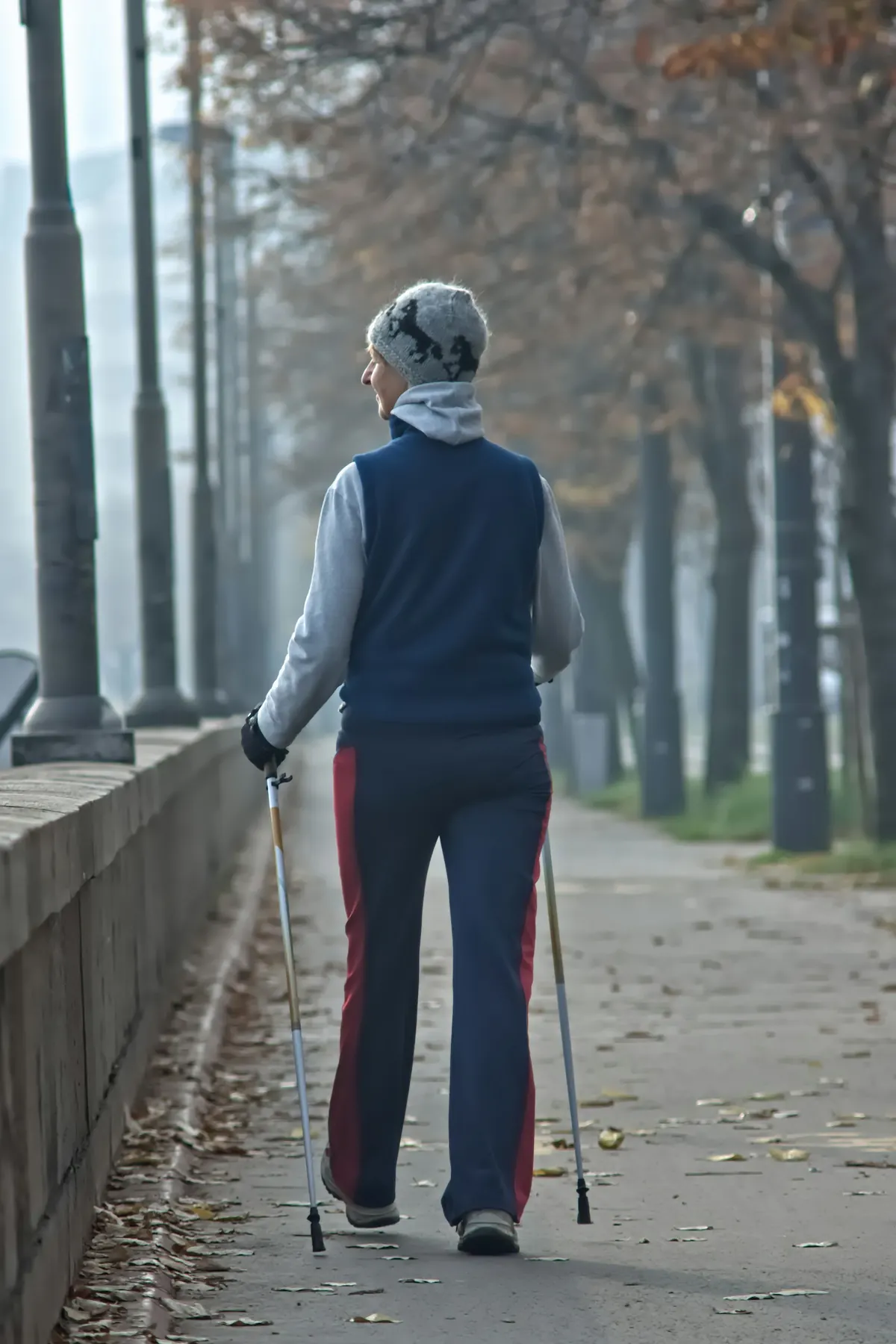
A woman walks with walking poles down a tree-lined path in autumn.
Walking is great for your heart. Your muscles also want something heavier.Photo: Gábor Kárpáti / Unsplash

How does creatine compare with the usual advice?

The Menopause Society’s guidelines don’t mention creatine. Here’s what they do say, next to what creatine has shown:

OptionMuscleBoneHot flashes
Hormone therapyDoesn't help or hurt muscle13Prevents bone loss and fractures13Works best13
Strength trainingBuilds strength, improves muscle-to-fat balance8Small bone benefit; strength and balance work means fewer falls15Not recommended as a hot-flash treatment14
Calcium & vitamin DNot covered1,000 to 1,200 mg calcium and 600 to 800 IU vitamin D a day; more calcium isn't better15Not covered
Creatine + trainingAbout 0.8 lb more muscle, 16.5 lb more on the leg press1No stronger bones13No data

One surprise: hormone therapy, so good for hot flashes and bone, didn’t help or hurt muscle, and the guidelines say women will need other ways to keep it.13 That’s exactly the gap where strength training, and maybe creatine with it, fits.

And exercise isn’t recommended for hot flashes, since proof is lacking and it can even set them off in some women. That’s about hot flashes only, not exercise in general.14

If you want to try it

The standard dose is 3 to 5 g of creatine monohydrate a day, and it’s well tolerated. The studies with results used 5 g or more, with strength training two to three days a week.117

Expect a small boost to your training, maybe a little water weight at first, and no change to your hot flashes. On hormone therapy? Tell your doctor, since nobody has studied the two together.

What we don’t know yet

  • Fractures: no trial has been big enough to tell.
  • Hot flashes: no study with a dummy powder.
  • Creatine with hormone therapy: the biggest trial left out women on it.3
  • Women who can’t or don’t lift: low-dose studies without training found nothing.45
  • More than two years, and women over 70 or with osteoporosis.

Questions women ask

Should I take creatine after menopause?

If you strength train, 5 g a day or more added a little muscle and strength over training alone in a big 2026 review. It hasn't been shown to protect your bones or help hot flashes. Without training, low doses did nothing anyone could measure.

Does creatine help with osteoporosis or bone strength?

Not that anyone has shown. Two 2-year trials and three big reviews found no stronger bones on bone scans. One trial saw the hip keep its shape a bit better, and fractures haven't been studied well. For bones, the Menopause Society recommends protein, calcium, vitamin D, strength and balance exercise, and a talk with your doctor about treatment.

Can creatine help hot flashes or night sweats?

There's no proper data. The Menopause Society says hormone therapy works best, and lists some non-hormone options that have been tested, like certain medicines and cognitive behavioral therapy (a kind of talk therapy). It does not recommend supplements or herbs for hot flashes.

Can I take creatine with hormone therapy?

Nobody has studied them together. The biggest bone trial left out women who had recently been on hormone therapy, and the 2026 review didn't look at them separately. If you're on it and thinking about creatine, ask your doctor.

How much creatine should I take after menopause?

The studies that found muscle and strength gains used 5 g a day or more, with strength training two to three days a week. The standard adult dose is 3 to 5 g a day, with an optional loading week first.

Will creatine make me gain weight after menopause?

A loading week can add 1 to 3 kg (about 2 to 6.6 lb), mostly water inside your muscles. Skip the loading week and you skip the sudden jump on the scale. In the 2-year trial, muscle went up a little more on creatine than on the dummy powder.

Sources

  1. Naddafha S et al. Creatine monohydrate for lean mass, strength, and bone density in postmenopausal women: a systematic review and meta-analysis. J Int Soc Sports Nutr. 2026;23(1):2668435. pmc.ncbi.nlm.nih.gov/articles/PMC13182165/
  2. Chilibeck PD et al. Effects of creatine and resistance training on bone health in postmenopausal women. Med Sci Sports Exerc. 2015;47(8):1587–95. pubmed.ncbi.nlm.nih.gov/25386713/
  3. Chilibeck PD, Candow DG et al. A 2-yr randomized controlled trial on creatine supplementation during exercise for postmenopausal bone health. Med Sci Sports Exerc. 2023;55(10):1750–1760. pmc.ncbi.nlm.nih.gov/articles/PMC10487398/
  4. Sales LP et al. Creatine supplementation (3 g/d) and bone health in older women: a 2-year, randomized, placebo-controlled trial. J Gerontol A Biol Sci Med Sci. 2020;75(5):931–938. pubmed.ncbi.nlm.nih.gov/31257405/
  5. Lobo DM et al. Effects of long-term low-dose dietary creatine supplementation in older women. Exp Gerontol. 2015;70:97–104. pubmed.ncbi.nlm.nih.gov/26192975/
  6. Forbes SC, Chilibeck PD, Candow DG. Creatine supplementation during resistance training does not lead to greater bone mineral density in older humans: a brief meta-analysis. Front Nutr. 2018;5:27. pmc.ncbi.nlm.nih.gov/articles/PMC5928444/
  7. Gualano B et al. Creatine supplementation and resistance training in vulnerable older women: a randomized double-blind placebo-controlled clinical trial. Exp Gerontol. 2014;53:7–15. doi.org/10.1016/j.exger.2014.02.003
  8. Walter F et al. Analysis of the additive effects of nutritional strategies in strength training interventions in postmenopausal women: a systematic review. Sports Med Open. 2026;12(1):5. pmc.ncbi.nlm.nih.gov/articles/PMC12804528/
  9. Greendale GA et al. Changes in body composition and weight during the menopause transition. JCI Insight. 2019;4(5):e124865. pmc.ncbi.nlm.nih.gov/articles/PMC6483504/
  10. Hall L et al. Impact of creatine supplementation on menopausal women's body composition, cognition, estrogen, strength, and sleep (conference abstract). J Int Soc Sports Nutr. 2025;22(Suppl 1):2533673. pmc.ncbi.nlm.nih.gov/articles/PMC12291186/
  11. Korovljev D et al. CONCRET-MENOPA: a randomized controlled trial in perimenopausal and menopausal women. J Am Nutr Assoc. 2025;45(3):199–210. pubmed.ncbi.nlm.nih.gov/40854087/
  12. Lyoo IK et al. A randomized, double-blind placebo-controlled trial of oral creatine monohydrate augmentation for enhanced response to an SSRI in women with major depressive disorder. Am J Psychiatry. 2012;169(9):937–945. pmc.ncbi.nlm.nih.gov/articles/PMC4624319/
  13. The North American Menopause Society. The 2022 hormone therapy position statement. Menopause. 2022;29(7):767–794. doi.org/10.1097/GME.0000000000002028
  14. The North American Menopause Society. The 2023 nonhormone therapy position statement. Menopause. 2023;30(6):573–590. doi.org/10.1097/GME.0000000000002200
  15. The North American Menopause Society. Management of osteoporosis in postmenopausal women: the 2021 position statement. Menopause. 2021;28(9):973–997. doi.org/10.1097/GME.0000000000001831
  16. Smith-Ryan AE et al. Creatine supplementation in women's health: a lifespan perspective. Nutrients. 2021;13(3):877. pmc.ncbi.nlm.nih.gov/articles/PMC7998865/
  17. Kreider RB et al. International Society of Sports Nutrition position stand: safety and efficacy of creatine supplementation in exercise, sport, and medicine. J Int Soc Sports Nutr. 2017;14:18. pmc.ncbi.nlm.nih.gov/articles/PMC5469049/

Read next